Sciatica is a symptom, not a diagnosis, which is why finding the real cause matters so much for relief. The term describes pain that travels along the sciatic nerve, usually from the low back through the buttock and down one leg. For people in Springdale dealing with that sharp, shooting pain, the key is identifying what is irritating the nerve in the first place, then addressing it directly.
Too often, sciatica gets treated as if the leg is the problem. The leg is where you feel it, but the source is almost always higher up in the spine or pelvis.
Sciatica Is a Symptom, Not a Diagnosis
The sciatic nerve is the longest nerve in the body. It starts in the lower spine, runs through the buttock, and branches down each leg. When something presses on or irritates that nerve, you can feel pain, burning, numbness, or a pins-and-needles sensation anywhere along its path.
Because the nerve is so long, the spot where you hurt is not always the spot causing the trouble. Pain behind the knee or in the calf can trace back to a problem in the low back. That is why chasing the leg pain alone rarely solves anything for long.
What Sciatica Actually Feels Like
Sciatica does not feel the same for everyone. Some people describe a sharp, electric jolt that runs down the leg, while others feel a deep, dull ache or a steady burning. It usually affects one side rather than both.
The symptoms often shift with position. Many people notice it flares when they sit for a long stretch, stand up after resting, cough, or sneeze. You might also feel weakness in the leg or foot, or a heaviness that makes the limb feel harder to control. Paying attention to what makes it better or worse gives useful clues about the source.
Common Causes of Sciatic Nerve Pain
Several issues can irritate the sciatic nerve. Pinpointing which one is at play is the whole point of a good exam.
- Herniated or bulging disc. A disc pressing on a nerve root in the lower spine is one of the most common triggers. Learn about how we help patients who are dealing with disc issues on our other blog post about non-surgical spinal decompression.
- Spinal stenosis. Narrowing of the spinal canal can crowd the nerves and cause leg symptoms, often worse with standing or walking.
- Piriformis involvement. A tight muscle deep in the buttock can irritate the nerve as it passes nearby.
- Degenerative changes. Age-related wear in the discs and joints can gradually reduce the space nerves need.
- Pelvic or joint dysfunction. Poor mechanics in the low back and pelvis can put uneven stress on the nerve pathway.
Sciatica also tends to overlap with ongoing low back pain, since the same underlying issues often drive both.
When Sciatica Needs Urgent Care
Most sciatica is not an emergency, but a few warning signs call for prompt medical attention. Get evaluated right away if you develop loss of bladder or bowel control, numbness in the groin or saddle area, or rapidly worsening weakness in the leg or foot. These can point to serious nerve compression.
Short of those red flags, conservative care is often a sensible starting point. It aims to reduce the irritation without surgery or long-term reliance on pain medication.
How Chiropractic Care Approaches Sciatica
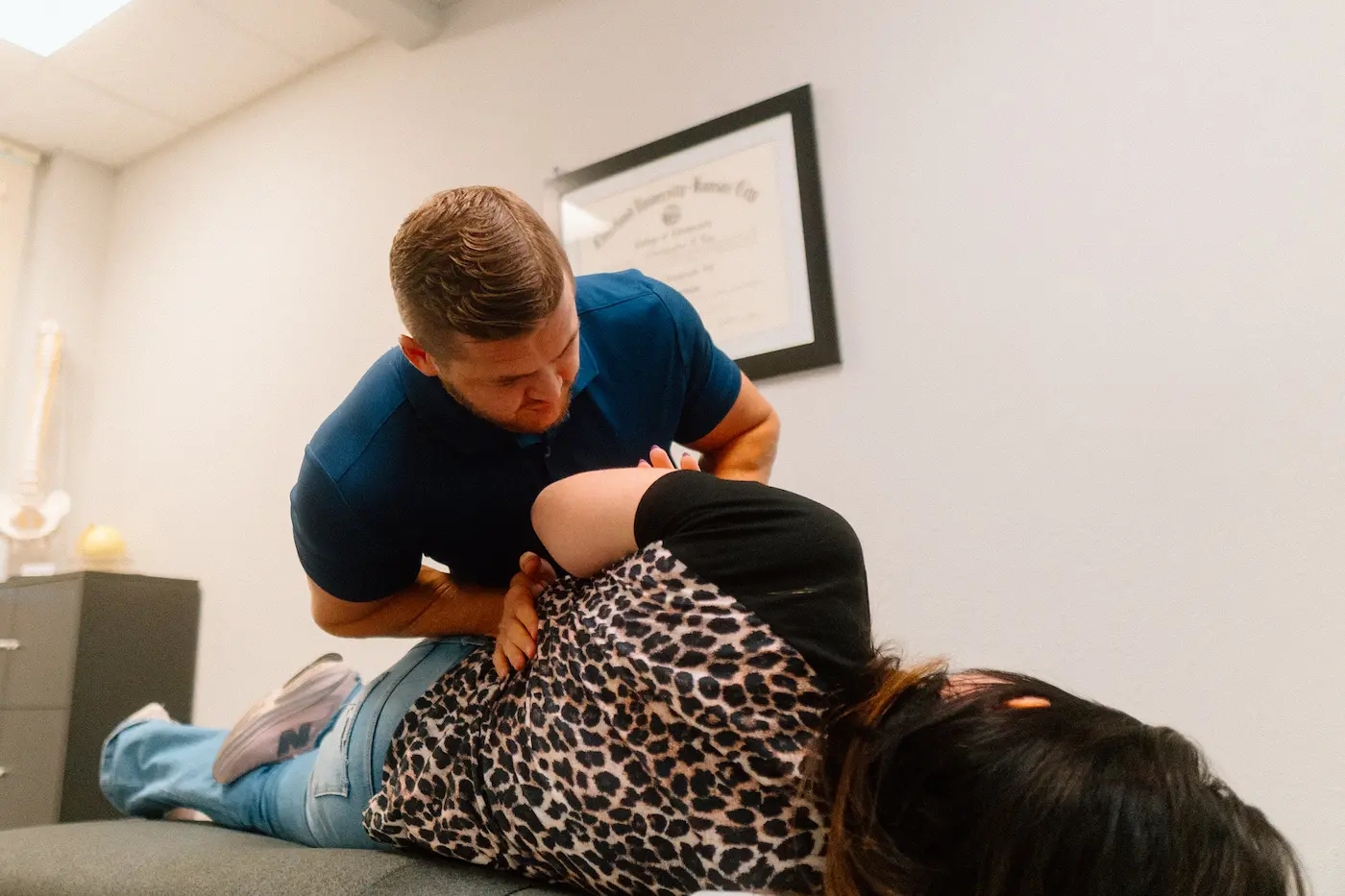
Chiropractic care focuses on the source of the nerve irritation rather than only the symptom. After a thorough assessment, gentle adjustments help restore better movement and alignment in the low back and pelvis, which may take pressure off the nerve pathway.
Care usually goes beyond the adjustment itself. We often combine chiropractic care with specific stretches and strengthening work so the spine is better supported over time. When a disc is the main driver, lumbar decompression may be added to gently ease pressure on the affected level.
The aim is to calm the current flare and reduce the odds of it returning. Because everyone’s cause is a little different, the plan we build for one patient may look different from the next, even when the leg pain seems similar on the surface.
How Long Does Sciatica Take to Improve?
Recovery depends on the cause and how long it has been going on. Some people respond quickly, while others with longstanding disc or joint changes need more time. As a general rule, a problem that developed over years often takes longer to settle than one that flared up recently, though many people notice steady progress along the way.
What Your First Visit Looks Like
The first appointment is about understanding your specific case rather than jumping straight to treatment. We start with a conversation about your history, when the pain began, and what makes it better or worse.
From there, we perform an exam that looks at how you move, tests reflexes and strength, and checks which positions reproduce your symptoms. If imaging is needed to see the structures more clearly, we discuss that too. Only after we understand the likely source do we talk through a care plan that fits your situation.
Simple Steps That May Help at Home
While care is underway, a few habits can support recovery. Gentle movement usually beats long bed rest, since staying still too long can stiffen the low back. Short walks, easy position changes, and avoiding prolonged sitting can make a real difference.
Be cautious with heavy lifting and twisting until the flare settles. If sitting bothers you, a small change in chair height or a supportive cushion can reduce the strain on your low back through the day.
Preventing Sciatica From Returning
Getting out of a flare is one thing. Keeping it from coming back is where lasting relief really lives. Once the pain settles, the focus shifts to supporting the spine so the same problem does not resurface.
That usually means building strength in the core and hips, staying active without overloading the back, and paying attention to how you sit, lift, and move through the day. Simple changes, like breaking up long periods of sitting and lifting with your legs instead of your back, go a long way. We often send patients home with a short routine tailored to their situation so the progress made in the office holds up over time.
Frequently Asked Questions
Will sciatica go away on its own?
Sometimes it does, especially milder cases. But when the pain keeps returning or lingers for weeks, that usually means the underlying cause has not been addressed, and an exam with our of our chiropractors can help identify what is driving it.
Is walking good or bad for sciatica?
For most people, gentle walking helps more than it hurts because it keeps the spine moving and discourages stiffness. If a specific activity makes it worse then it’s definitely worth mentioning at your visit so we can adjust your plan.
Should I use heat or ice?
Both can help depending on the situation. Ice tends to calm a fresh, angry flare, while heat can loosen tight muscles that build up around the area. Many people alternate, and we can give you guidance based on what your body responds to.
Get to the Source of Your Sciatica in Springdale
If sciatic pain is limiting your day, finding the cause is the first real step toward lasting relief. Call our team at (479) 756-1155 or get in touch through our contact page to schedule an evaluation at Favorite Family Chiropractic in Springdale.