Non-surgical spinal decompression is a conservative option many people in Springdale try before considering surgery for a herniated or bulging disc. It uses gentle, controlled stretching of the spine to ease pressure on the affected disc and the nerves around it. Not every disc problem responds the same way, but for the right candidate, it can be a low-risk first step toward relief.
If you have been told you have a disc issue, you have probably heard a wide range of advice, from “just rest” to “you may eventually need surgery.” The truth usually sits somewhere in between, and it starts with understanding what is actually happening in your spine.
What Happens When a Disc Herniates or Bulges
Between each pair of vertebrae sits a spinal disc, a tough outer ring with a soft, gel-like center. These discs act as cushions and let your spine bend and twist. Over time, or after an injury, that outer ring can weaken.
When the disc pushes outward but stays contained, it is called a bulging disc. When the inner material breaks through the outer wall, that is a herniated disc. Both can press on nearby nerves, and that pressure is often what drives the pain, numbness, or tingling people feel.
Why the Same Injury Feels Different for Different People
A disc that bulges in the low back may cause aching, stiffness, or pain that travels down the leg. A disc in the neck can send symptoms into the shoulder, arm, or hand. And here is the part that surprises people: the size of a disc bulge on an MRI does not always match how much pain someone feels. Some large bulges cause little trouble, while a smaller one in a sensitive spot can be quite painful.
What Puts a Disc at Risk
Disc problems rarely appear out of nowhere. They usually build over time as the spine takes on repeated stress, and understanding the causes can help you protect your back going forward.
Common contributors include years of poor posture, repetitive bending or lifting, a sudden strain from lifting something heavy the wrong way, and the natural wear that comes with age. Extra body weight, a sedentary routine, and long hours of sitting all add load to the lower spine as well. Genetics play a role too, since some people simply have discs that wear faster than others.
None of these guarantees a disc problem, but stacking several of them raises the odds. The good news is that many are within your control, which matters both for recovery and for keeping a future flare from taking hold.
How Non-Surgical Spinal Decompression Works
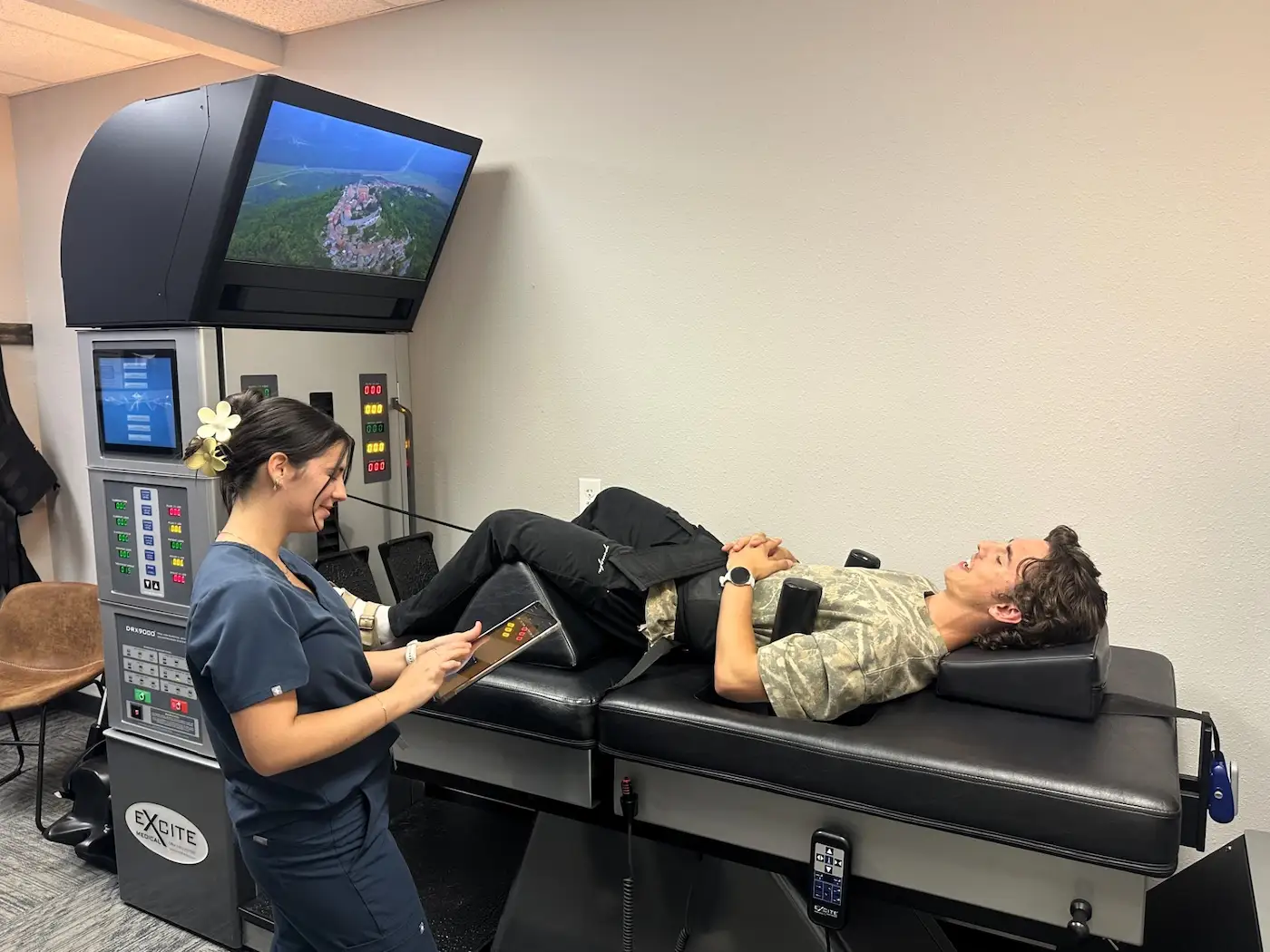
Spinal decompression therapy works by gently stretching the spine in a slow, controlled way. The goal is to create a small amount of negative pressure inside the disc. That change in pressure may help draw the herniated material slightly inward and take some load off the irritated nerve.
Sessions are comfortable for most people. You stay clothed and lie on a specialized table while the system applies and releases tension in cycles. Many patients describe it as a mild pulling sensation rather than anything forceful.
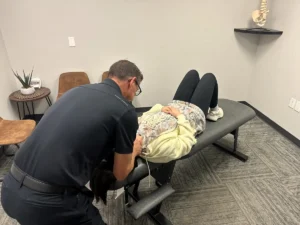
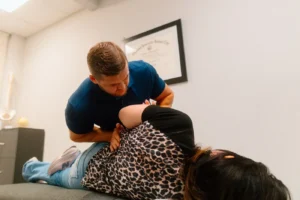
At our Springdale practice, decompression is often paired with chiropractic adjustments and specific exercises so the surrounding muscles can better support the spine between visits. We tailor the approach to whether the problem is in the low back with lumbar decompression or in the neck with cervical decompression.
Why Active Care Matters Alongside Decompression
Decompression eases pressure, but it works best when the muscles that stabilize your spine are doing their job. That is why care usually includes targeted movement and strengthening. Building support around the injured area helps hold the gains you make and lowers the chance of the same disc flaring up again down the road.
Who Tends to Be a Good Candidate
Decompression is not right for every disc problem, and being honest about that matters. It tends to help most when the main issue is a contained bulge or a herniation that is irritating a nerve, and when conservative care has a reasonable chance before more invasive steps.
People often consider it when they want to avoid surgery, when injections have provided only short-term relief, or when they simply want a drug-free option to try first. That said, a proper exam comes before any care plan. We review your history, check how you move, and look at any imaging you already have.
When a Disc Problem Needs Prompt Medical Attention
Some symptoms point to a problem that needs urgent evaluation rather than conservative care. Seek prompt medical attention if you notice loss of bladder or bowel control, progressive weakness in a leg or arm, numbness in the saddle area between the legs, or severe pain that does not ease at all with rest. These can signal nerve compression that should be assessed right away.
Chiropractic care and decompression are meant to work alongside your medical care, not to replace it. We never advise anyone to stop medication or ignore a physician’s guidance, and part of a responsible exam is recognizing when a case belongs with a specialist.
What to Expect During Care in Springdale
Your first visit focuses on figuring out the real source of the problem. That usually means a consultation, a physical and orthopedic exam, and a review of imaging when it is helpful. From there, we talk through whether decompression fits your situation and what a realistic plan looks like.
A typical session is short and relaxed, and most people carry on with their day afterward. We usually recommend a series of visits rather than a single treatment, since discs respond to steady, repeated care rather than a quick fix. Throughout, we check how you are responding and change course if something is not working.
Progress varies. Some people feel changes within a few weeks, while others with longstanding disc problems or degenerative disc changes take longer. We track how you respond and adjust the plan instead of pushing a one-size-fits-all schedule.
Frequently Asked Questions
Is spinal decompression painful?
Most people find it comfortable. The stretch is gentle and gradual, and many patients relax or even doze during a session. If anything feels uncomfortable, we adjust the settings. There’s also a handheld safety button we hand you just in case you don’t find anything comfortable.
Can a herniated disc heal without surgery?
In many cases, yes. A large share of disc herniations improve with conservative care over time as the inflammation settles and the disc material is reabsorbed. Decompression, adjustments, and targeted exercise may support that process, though results differ from person to person.
How many sessions will I need?
There is no single answer, since it depends on the severity of the disc problem and how long it has been present. After your exam we can give you a clearer sense of what a reasonable plan looks like, and we reassess as you go rather than locking you into a fixed number up front.
How is decompression different from regular traction?
Basic traction simply pulls the spine, which can trigger the muscles to guard and tighten. Decompression uses a controlled cycle of tension and release designed to work with the body rather than against it, which is generally more comfortable and better tolerated. We also calibrate the machine to target your exact area of need which Dr. Chris or Dr. Justin lay out in your care plan.
Talk With Our Team in Springdale
If a herniated or bulging disc is affecting your daily life, a proper evaluation is the best next step to understand your options. Call us at (479) 756-1155 or reach out through our contact page to schedule a visit at Favorite Family Chiropractic in Springdale.