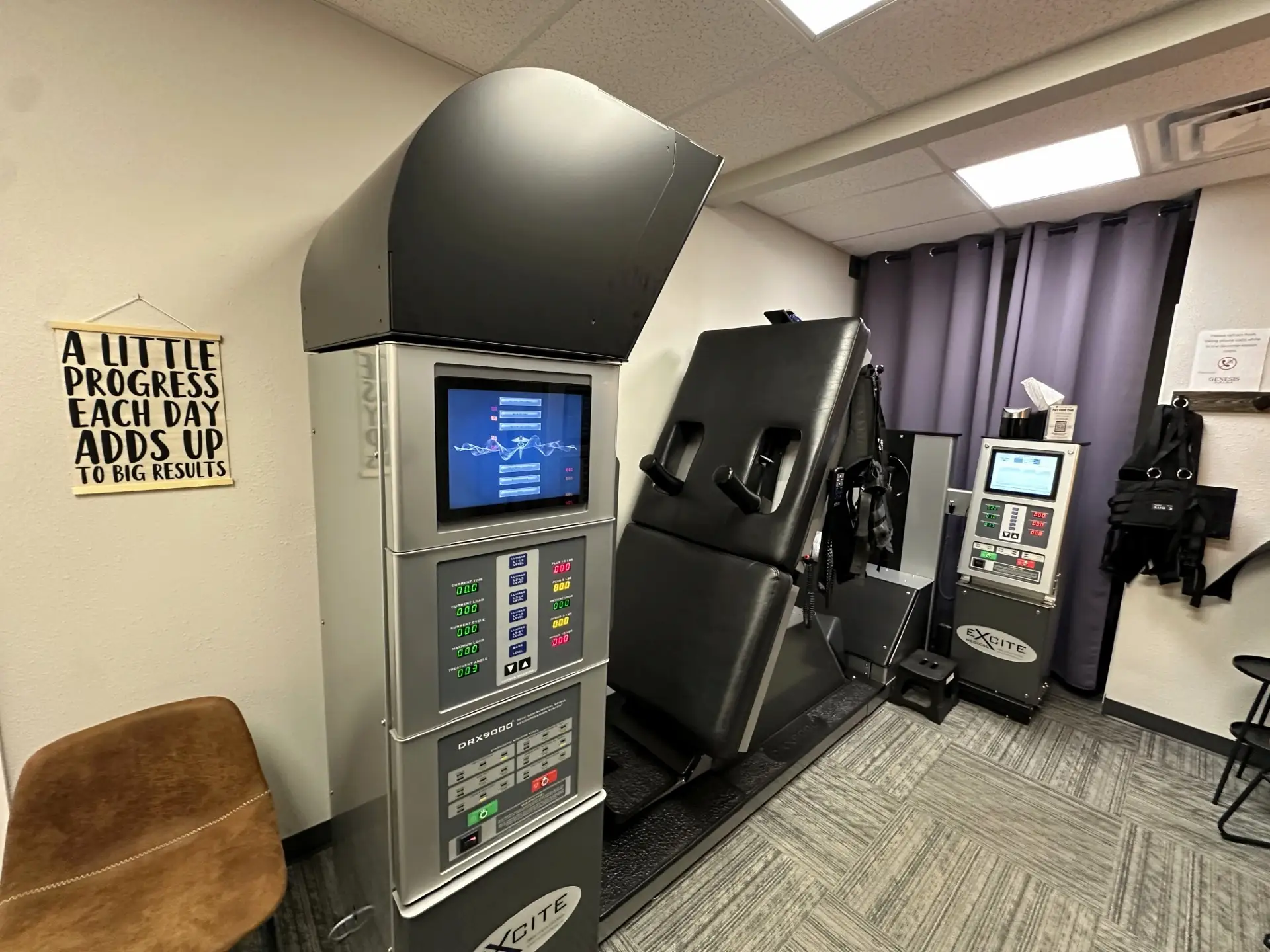
The biggest difference between DRX9000 spinal decompression and traditional traction is control. Traction applies a steady pull that your back muscles often tighten against, while the DRX9000 uses a computer-guided cycle of gradual pulling and relaxing designed to lengthen the spine without setting off that muscle guarding. If you’re weighing your options for spinal decompression in Springdale, that difference is the reason the two aren’t interchangeable.
“Isn’t Decompression Just Traction?”
I hear this question almost every week, and it’s a fair one. Both approaches gently stretch the spine, and from across the room the equipment can look similar.
A lot of the patients who ask have already tried traction somewhere else and didn’t get far. So they want to know if this is more of the same. The honest answer is that the goal overlaps, but the way the force is applied is different, and that changes how your body responds.
How Traditional Traction Works
Traditional traction pulls on the spine with a fixed or steadily increasing force. That might be a weighted system, an inversion table, an over-the-door neck device, or a basic motorized table.
Here’s the catch. Your body is wired to protect itself, and when muscles feel a sudden or constant pull, they tend to contract to resist it. Those tight muscles end up working against the stretch, which limits how much the space between your vertebrae actually opens.
Traction isn’t useless. Some people with general stiffness or mild muscle tightness feel better with it. It just isn’t built to target a specific disc.
How DRX9000 Decompression Works
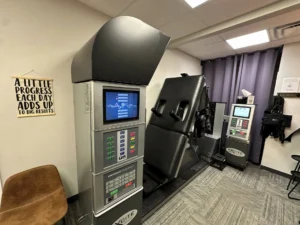
We use Excite Medical’s DRX9000 in our office, and we’re the only Springdale-area office registered with it. Here’s what it does differently.
A slow pull, then a release
The DRX9000 doesn’t yank on your spine. It raises the pulling force gradually, holds, then eases back, and it repeats that cycle throughout the session.
That rhythm is designed to keep your muscles relaxed so the stretch reaches the spine instead of getting soaked up by tight muscles. The system also monitors your body’s resistance during the session and adjusts, rather than pushing through it if you start to tense up.
Settings aimed at the problem area
The angle and force of the pull are set based on which part of the spine we’re treating. A disc low in the lumbar spine calls for different settings than one higher up.
This is where the exam and imaging matter. The settings should match what we actually find, not a generic program that treats every back the same way.
One system for the low back and the neck
We use the DRX9000 for both lumbar decompression and cervical decompression. So a patient with a bulging disc in the low back and a patient with disc-related neck pain and arm tingling can both be evaluated and treated in the same office.
The goal: take pressure off the disc
When the spine is lengthened in a controlled way, the aim is to reduce pressure inside the disc. That may help a bulging or herniated disc ease off a nearby nerve and give the area a better environment to heal.
I go deeper into that process in my post on non-surgical spinal decompression for herniated and bulging discs.
Why the Muscle Response Matters So Much
Think about someone grabbing your arm and pulling hard without warning. You’d tighten up and pull back. Now think about someone slowly easing your arm into a stretch and letting go before it gets uncomfortable. You’d probably relax and let it happen.
Your spine works the same way. When the muscles around it stay calm, the stretch can do its job. That’s the core idea behind true decompression and the main reason it feels so different from the traction many patients tried before.
Where Adjustments Fit In
Decompression is rarely the only thing we do. Many disc patients also have stiff joints in the spine or pelvis that change how the whole area moves and loads.
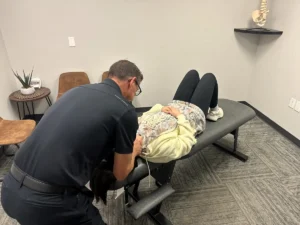
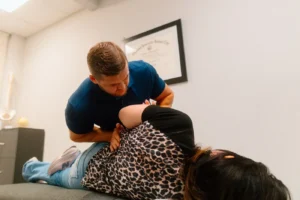
That’s why decompression is often paired with chiropractic adjustments using Motion Specific Technique, Diversified, or Prone adjusting, depending on what the exam shows. The decompression works on the disc, and the adjustments work on how the surrounding joints move. Used together, they give your body a better chance to settle down.
Some patients don’t need decompression at all. If your pain is coming from joints or muscles rather than a disc, adjustments and home exercises may be all it takes.
DRX9000 Decompression vs. Traction at a Glance
| Feature | Traditional Traction | DRX9000 Decompression |
|---|---|---|
| How force is applied | Steady or static pull | Gradual pull-and-release cycles |
| Muscle response | Muscles often tighten to resist | Designed to keep muscles relaxed |
| Targeting | General stretch | Angle and force set for the area being treated |
| Monitoring | Usually none | Adjusts to your body’s resistance during the session |
| Best fit | General stiffness or mild muscle tightness | Disc-related pain confirmed by an exam |
Who May Be a Good Candidate
Decompression tends to make the most sense when pain traces back to a disc. In our office, good candidates often include people with:
- Herniated or bulging discs in the low back or neck
- Sciatica caused by disc pressure on a nerve
- Degenerative disc disease
- Pain running down an arm or leg, with or without numbness or tingling
- Disc pain that hasn’t improved with other conservative care
If sciatica is your main complaint, my post on what’s really causing your sciatica is a good place to start.
Who Probably Isn’t
Not everyone is a decompression candidate, and I’d rather tell you that at the first visit than after several sessions. Decompression generally isn’t used for people who are pregnant, have had a spinal fusion with hardware, have advanced osteoporosis or a recent fracture, or have certain tumors or infections.
New leg or arm weakness that keeps getting worse, or any loss of bladder or bowel control, isn’t a decompression question. Those symptoms need emergency medical care right away.
For everyone else, the answer depends on the exam. Sometimes chiropractic adjustments alone are the better place to start. Sometimes the right call is a referral to a physician or for an MRI, and I’ll tell you if that’s the case.
What a Session Actually Feels Like
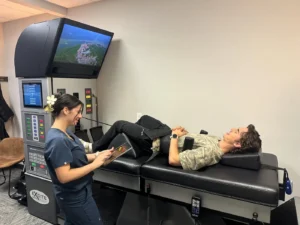
You stay fully clothed. You lie comfortably on your back while the system holds you in position, and the machine does the work.
Most people feel a gentle stretch, not pain, and plenty of patients relax enough to nearly doze off. If anything feels wrong, the session can be stopped right away.
Decompression is usually done as a series of visits over several weeks rather than a one-time fix. We’ll talk through a realistic timeline based on your condition before you start.
Common Questions About Decompression vs. Traction
Can decompression help if traction didn’t?
In many cases, it’s still worth evaluating. Traction not helping doesn’t rule out decompression, since the two apply force so differently. The exam will show whether your pain is likely disc-related and whether you’re a good fit.
Will my insurance cover it?
Coverage depends on your plan. We accept most major insurance, including BCBS, Ambetter, UMR, United, and Medicare, and our team can check your benefits. You can find more on our insurance and payment page.
Do I need X-rays first?
If imaging is needed, we have digital X-ray on site. That means we can usually take it during your first visit instead of sending you somewhere else.
If you’ve been told decompression is “just traction,” come see the difference for yourself. Walk-ins are always welcome at our Springdale office, or you can contact us or call 479-756-1155.