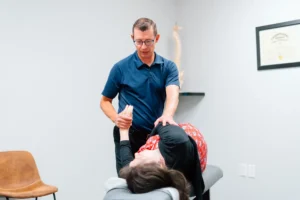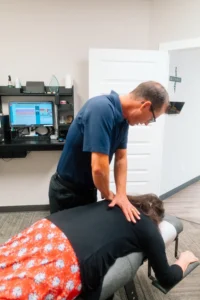

Numbness or tingling in your arm is often caused by a pinched nerve in your neck, where a bulging disc or arthritis presses on a nerve root as it leaves the spine. Because that nerve travels all the way to your hand, the trouble in your neck can show up in your shoulder, arm, or fingers. For many of the patients we see in Springdale with a pinched nerve in the neck, a thorough exam and conservative care, including cervical decompression when a disc is involved, may help ease that pressure without surgery.
How a Problem in Your Neck Shows Up in Your Hand
Your neck has seven vertebrae, with a disc between most of them. Between each level, a pair of nerves exits the spine and runs down into the shoulders, arms, and hands.
When something crowds one of those nerves right where it leaves the spine, the nerve can get irritated. You may feel it in your neck, but often the strongest symptoms show up farther down the line, in the arm or hand that nerve supplies.
In our Springdale office, it’s common for a patient to come in worried about their wrist when the real source is a few inches below their skull.
Which fingers tingle can be a clue
Different nerves tend to supply different parts of the hand. Tingling in the thumb and index finger, the middle finger, or the ring and pinky fingers can point toward different levels of the neck.
It’s not a perfect map, and plenty of people have overlapping symptoms. But it’s one of the clues we use during the exam to narrow down where the problem starts.
Common Causes of a Pinched Nerve in the Neck
- Herniated or bulging discs. Disc material pushes out and presses on a nerve root. Our herniated and bulging disc page explains more.
- Disc wear and bone spurs. As discs lose height, the openings for the nerves get smaller, and bone spurs can crowd them further. My post on degenerative disc disease covers what those changes mean.
- Posture. Hours of looking down at a phone or leaning toward a screen add load to the lower neck, where many of these problems start.
- Injury. Car accidents and sports collisions can strain the neck and sometimes injure a disc. Symptoms may not show up right away, which I explain in my post on delayed whiplash symptoms.
Why Looking Down Adds Up
Your head is heavy, roughly the weight of a bowling ball. When it sits balanced over your shoulders, your neck carries that weight without much trouble.
Tip your head forward to read a phone or lean toward a laptop, and the muscles and discs of the lower neck have to work much harder to hold it up. One afternoon of that won’t hurt you. Years of it, day after day, can add steady pressure to the same discs where most pinched nerves start.
This is why we ask about your workday, your phone habits, and how you sleep. Those details often matter as much as what shows up on an X-ray.
Is It Your Neck or Your Wrist?
Arm and hand numbness doesn’t always come from the neck. Carpal tunnel syndrome, for example, involves a nerve squeezed at the wrist, and the two can feel similar.
A few patterns make the neck more likely:
- Neck pain or stiffness along with the arm symptoms
- Pain near or between the shoulder blades
- Symptoms that change when you turn your head or look up
- Relief when you rest your hand on top of your head
- Tingling that runs down the whole arm rather than just the hand
Some people have trouble in both places. A careful exam that checks reflexes, strength, and sensation helps sort out which is which.
How Cervical Decompression Works
When a disc is pressing on a nerve, cervical decompression gently lengthens the neck to take pressure off that disc. We use Excite Medical’s DRX9000, which applies a slow, controlled pull and release designed to keep your neck muscles relaxed during the session.
The aim is to reduce pressure inside the disc and create a little more room for the irritated nerve. Your head rests comfortably while the system does the work, and most patients feel a gentle stretch rather than pain.
If you’ve tried traction before and wondered whether this is the same thing, my post on DRX9000 decompression vs. traditional traction explains the difference.
Who May Be a Good Candidate
Cervical decompression tends to make the most sense when the exam points to a disc as the source of the arm symptoms. That often includes people with a bulging or herniated disc in the neck, disc wear with nerve irritation, or arm pain that hasn’t improved with other conservative care.
It isn’t right for everyone. Fractures, advanced osteoporosis, spinal fusion hardware in the neck, certain tumors or infections, and some other conditions rule it out. If decompression isn’t a good fit, I’ll tell you and explain what is.
What Else Is Part of Care
Decompression is rarely the whole plan. Gentle adjustments help restore motion to stiff joints in the neck and upper back, which can take some strain off the irritated area.
Small daily changes matter too. Raising your phone to eye level, setting up your workstation so you aren’t leaning forward, and finding a pillow that keeps your neck level at night all help between visits. Our neck pain page covers more of the everyday causes we see.
Recovery times vary. Some people notice the tingling ease within a few weeks, while long-standing nerve irritation can take longer. We’ll talk through a realistic timeline after your exam.
When to Get Medical Care Right Away
Most pinched nerves in the neck aren’t emergencies. A few symptoms need prompt medical attention, though:
- Arm or hand weakness that is getting worse
- Clumsy hands, trouble with buttons or handwriting, or balance problems when walking
- Numbness or weakness in both arms or in your legs
- Any change in bladder or bowel control
- Neck pain with fever, or after a significant fall or crash
- Arm or jaw pain with chest pressure or shortness of breath, which can signal a heart problem
These can point to pressure on the spinal cord or another serious condition that needs a physician first.
Pinched Nerve FAQs
Can a pinched nerve in the neck heal on its own?
Some mild cases settle down over several weeks as inflammation eases. If symptoms are getting worse, spreading, or still hanging around after a few weeks, it’s worth having the cause evaluated.
Do I need an MRI?
Not always. Many patients start with an exam and X-rays, but an MRI may be recommended if your symptoms are severe, getting worse, or not responding to care, since it shows the discs and nerves directly.
Why does my arm hurt more at night?
Sleeping positions that tilt or twist the neck can narrow the space around an irritated nerve for hours at a time. A pillow that keeps your head level with your spine often makes a noticeable difference.
If tingling in your arm or hand has you worried, let’s find out where it’s really coming from. Walk-ins are welcome at our Springdale office, or you can contact us or call 479-756-1155.