Spinal stenosis and a herniated disc can both cause leg pain, but they usually behave differently. Stenosis pain tends to build when you stand or walk and ease when you sit or lean forward, while herniated disc pain often gets worse with sitting, bending, or coughing. Knowing which one you’re dealing with shapes the right spinal stenosis treatment, and in Springdale that starts with a thorough exam in our office.
Two Different Problems, One Familiar Complaint
“My legs hurt when I walk” is something I hear from patients of all ages. Sometimes it’s a disc. Sometimes it’s stenosis. Sometimes it’s a little of both.
Both conditions can irritate the nerves that run from your low back into your legs, so the symptoms overlap. But the cause is different, the pattern is different, and the treatment plan is often different too. Getting it right matters.
What Spinal Stenosis Is
Spinal stenosis means the spaces your nerves travel through have narrowed. That can happen in the central canal where the spinal cord and nerve bundle run, or in the side openings where individual nerves exit.
The narrowing usually develops slowly. Thickened ligaments, arthritis in the small facet joints, bone spurs, and discs that have lost height can all crowd the space over time. That’s why stenosis shows up most often in people over 50, and why it’s often connected to degenerative disc disease.
What a Herniated Disc Is
Your discs sit between the vertebrae like shock absorbers. Each one has a tough outer ring and a softer, gel-like center.
When that outer ring weakens or tears, the inner material can bulge or push out and press on a nearby nerve. A herniated or bulging disc can happen at any adult age, often after lifting, twisting, or years of repeated strain. We see plenty of them in people in their 30s and 40s who work on their feet or lift for a living.
How the Pain Usually Behaves
This is where the two start to separate. No single clue is a diagnosis, but the patterns below help point us in the right direction.
| Clue | Spinal Stenosis | Herniated Disc |
|---|---|---|
| Worse with | Standing and walking | Sitting, bending forward, coughing, sneezing |
| Better with | Sitting or leaning forward | Standing, walking, or lying down |
| How it starts | Gradually over months or years | Often suddenly, sometimes after lifting or twisting |
| Leg symptoms | Heaviness, cramping, or tingling in one or both legs | Sharp, shooting pain usually down one leg |
| Typical age | Usually over 50 | Any adult age, common in 30s to 50s |
The shopping cart clue
Many people with stenosis notice they can walk much farther at the grocery store when they’re leaning on a cart. Bending forward opens up the spinal canal a little, which takes pressure off the nerves.
The same person might have to stop and sit after walking a short distance on the Razorback Greenway or around the neighborhood. Once they sit for a minute, the legs feel better and they can keep going.
The sitting clue
Disc pain often works the other way. Sitting puts more pressure on the discs in your low back, so long drives, desk work, or a few hours in the bleachers can make the leg pain worse. Standing up and walking around may bring some relief.
Can You Have Both?
Yes, and it’s more common than people think. A bulging disc can be one of the things narrowing the canal, so a disc problem and stenosis can sit side by side at the same level of the spine.
That’s one reason I don’t like guessing based on symptoms alone. If you’ve already read my post on what’s really causing your sciatica, you know leg pain can come from several places. Sorting out which ones are involved is the first job.
How We Sort It Out
Your visit starts with questions about when the pain started, what makes it better or worse, and how far you can walk before you have to stop. Then comes a hands-on exam that checks movement, reflexes, strength, and sensation in your legs.
If imaging is needed, we take digital X-rays on site at our Springdale office. X-rays show bone spurs, joint changes, and disc height, which helps with the stenosis picture. Discs themselves and the nerves don’t show up on X-ray, so if your exam suggests a significant disc or nerve problem, I may refer you for an MRI.
Treatment Options That Don’t Start With Surgery
Chiropractic adjustments
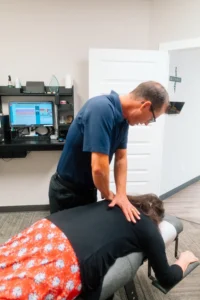
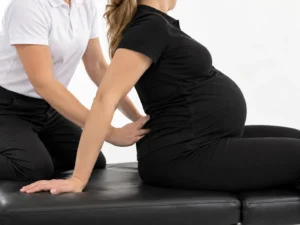
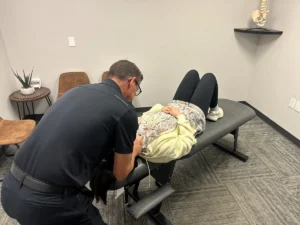
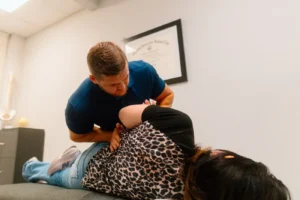
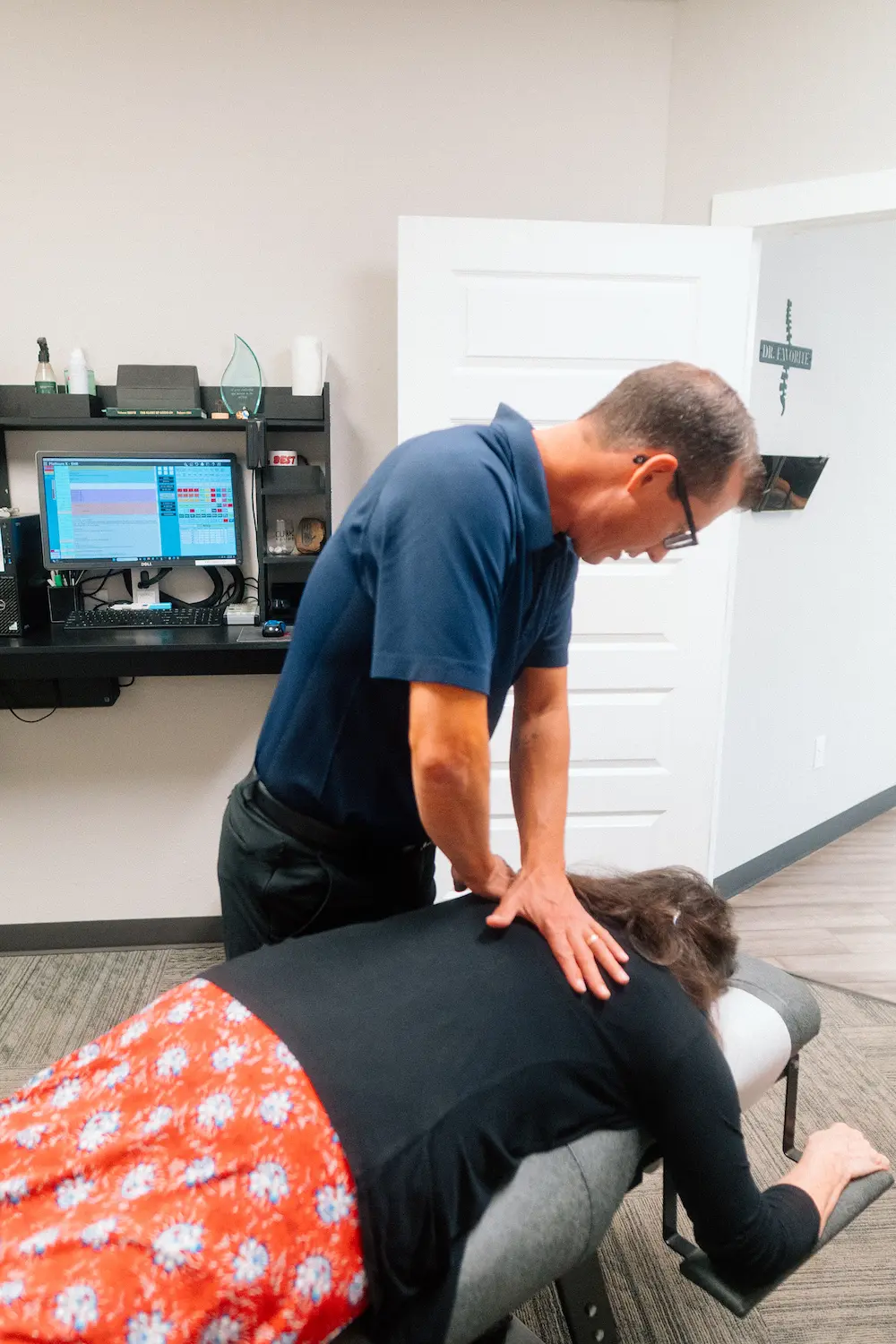
Gentle adjustments help restore motion to stiff joints in the low back and pelvis. For many patients with either condition, better joint movement means less strain on the surrounding tissues and nerves. Our chiropractic care is adapted to your age and condition, which matters a lot for older patients with stenosis.
Spinal decompression
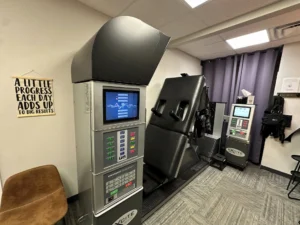
For herniated and bulging discs, decompression on the DRX9000 is often a strong option. I explain why in my post on non-surgical spinal decompression for herniated and bulging discs.
For stenosis, the answer is more case by case. When a disc is contributing to the narrowing, lumbar decompression may help. When the narrowing is mostly from bone and thickened ligaments, decompression is usually less helpful, and I’ll tell you that up front.
Movement and daily habits
For stenosis, exercises that gently flex the low back and walking in short, frequent bouts often help. A stationary bike is a favorite for many of our stenosis patients because you lean forward while you ride.
For disc problems, we’ll often work on breaking up long periods of sitting and lifting with better mechanics. Your plan should fit your life, not someone else’s.
Questions We Hear About Leg Pain
Why do my legs feel heavy instead of painful?
That heavy, tired, or crampy feeling in both legs after walking is a classic stenosis description. It’s sometimes called neurogenic claudication. It can feel a lot like poor circulation, which is one reason your physician may also want to check blood flow in your legs.
Is stenosis just part of getting older?
The changes that cause it are common with age, but living with constant leg pain doesn’t have to be. Many people with stenosis find ways to walk farther and stay active with the right mix of care and habits.
When Surgery or a Specialist Makes Sense
Conservative care is a reasonable place to start for many people, but not for everyone. Get medical care right away if you notice numbness in the groin or inner thighs, new trouble controlling your bladder or bowels, or leg weakness that is getting worse.
A referral to a spine specialist also makes sense when pain keeps progressing despite a fair trial of conservative care. A surgical consult isn’t a failure. Sometimes it’s the right next step, and I’d rather help you get there than keep treating something that isn’t responding.
You can find more about the condition itself on our spinal stenosis page.
If leg pain is cutting your walks short or keeping you out of the bleachers, let’s figure out what’s behind it. Patients from across Northwest Arkansas can walk in during office hours, or you can contact our office or call 479-756-1155.